


US Veto Blocks UN Ceasefire Resolution for Gaza
Jay Jackson
19 Sep 2025, 16:53 GMT+10
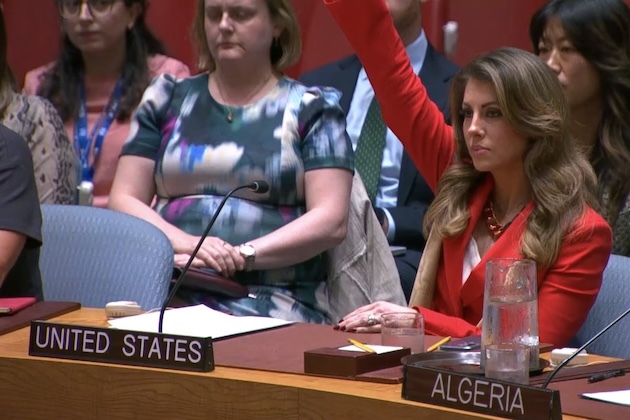
- One by one, the green lights illuminated on the voting board. Yes. Yes. Yes. Fourteen of 15 nations. voting in favor.
- Then, it was the turn of the United States.
- Ambassador Morgan Ortagus did not flinch. Her expression was one of practiced resolve.
NEW YORK, New York - The chamber of the United Nations Security Council was a study in quiet tension. The polished wood, the horseshoe table, the flags of fifteen nations standing stiffly—it was a theater of diplomacy that had, over eight decades, witnessed both the prevention of catastrophe and its agonizing facilitation. Thursday, on the occasion of its 10,000th meeting, it was poised for the latter.
The air, thick with the scent of old paper and murmured translation, seemed to hold its breath as the South Korean president of the Council for September, Sangjin Kim, opened the session. He spoke of the milestone, a number both "large and significant, like the challenges that remain before us." He spoke of the 137 nations that had sat in these seats, striving to fulfill a vital mandate: the maintenance of international peace and security.
But the historical weight of the moment was crushed by the immediate, brutal reality of the present. The resolution on the table was stark in its demands: an immediate, unconditional, and permanent ceasefire in the Gaza Strip. It called for the release of all hostages held by Hamas. It demanded Israel lift all restrictions on aid and allow its safe distribution to a population staring down famine.

The vote was a formality everyone saw coming, a script written in the cold calculus of power. One by one, the green lights illuminated on the voting board. Yes. Yes. Yes. Fourteen nations—the ten non-permanent members who had drafted the text, joined by four of the five permanent members, the UK, France, China and Russia—voted in favor. They voted for a halt to the killing of over 65,000 Palestinians. They voted for the return of the 48 hostages still held in tunnels since the horrific Hamas attack of October 7th. They voted for food to reach starving children.
Then, it was the turn of the United States.
Ambassador Morgan Ortagus did not flinch. Her expression was one of practiced resolve. As her veto was registered, a single red light shone on the board, a beacon of impunity that drowned out the fourteen greens. It was the fifth American veto of a ceasefire resolution since the war began.
The silence that followed was not one of shock, but of profound, weary resignation.
Speaking before the vote, Ortagus had already framed the American isolation. Her country's opposition, she stated, "will come as no surprise." The resolution, in the U.S. view, was fatally flawed. It did not condemn Hamas. It did not recognize Israel's right to defend itself. It "wrongly legitimizes the false narratives benefiting Hamas," she said, narratives that had "sadly found currency in this Council." It was a familiar argument, one that framed the choice not as one between war and peace, but between justice for one side and justice for the other.
But in the besieged enclave of Gaza, where Israeli forces were at that very moment pressing their offensive to take full control of Gaza City, there was no parsing of diplomatic language. There was only the roar of jets, the collapse of high-rise buildings, and the silent, spreading creep of famine. The veto was not an abstract political tool; it was the locking of a door behind which a humanitarian catastrophe was being allowed to escalate unchecked.
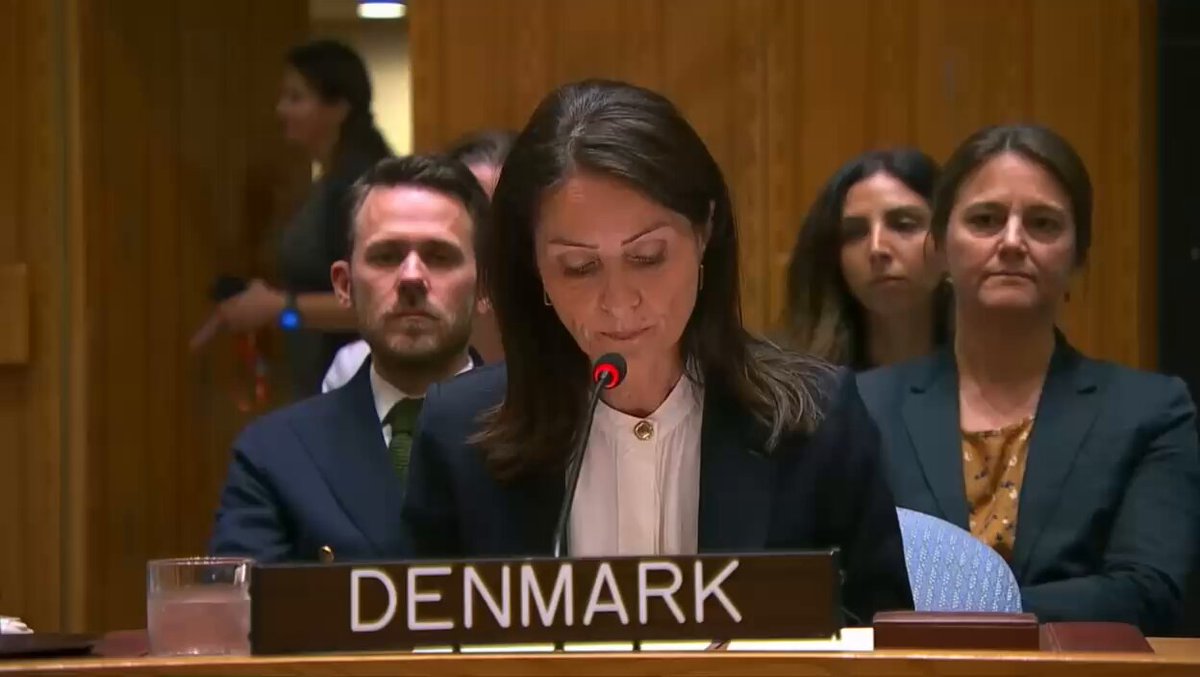
Following the vote, Danish Ambassador Christina Markus Lassen, speaking for the ten nations who brought the resolution, stood firm. Her voice, though calm, carried a sharp edge of defiance. "Even though this resolution was not adopted today at this 10,000th meeting of the Council, 14 members of this Council have sent a clear message," she declared. "We want to see an immediate and lasting ceasefire, the immediate and unconditional release of all hostages, and the urgent lifting of all restrictions on humanitarian aid. We will continue to work for this for however many Council meetings it may take."
Her words hung in the air, a promise of return. They would be back with another resolution, and another, until the violence stopped. They would force the United States, meeting after meeting, to stand before the world and use its privileged power to block the will of the international community, to defend its close ally, and to own the consequences.
As the delegates filed out of the historic meeting, the two realities coexisted in stark contrast. There was the UN of grand anniversaries, of reflective speeches on eight decades of striving for peace. And there was the UN of the present, where a single vote could perpetuate a war, where a milestone meeting became just another footnote in a long, grim record of failure. The ten-thousandth resolution had been blocked. The war, and the counting, would continue.
 Share
Share
 Tweet
Tweet
 Share
Share
 Flip
Flip
 Email
Email
Subscribe and Follow
Get a daily dose of Arizona Herald news through our daily email, its complimentary and keeps you fully up to date with world and business news as well.


News RELEASES
Publish news of your business, community or sports group, personnel appointments, major event and more by submitting a news release to Arizona Herald.
More InformationJerry Greenfield resigns, says Unilever stifled Ben & Jerry’s voice

LONDON, U.K.: Jerry Greenfield, who co-founded Ben & Jerry's nearly 50 years ago, has stepped away from the ice cream brand, saying...
China signals TikTok can use algorithm in US divestment deal

MADRID, Spain: The fate of TikTok in the United States may hinge on its most valuable asset: the algorithm that fuels its endless scroll...
U.S. stocks move higher as dollar rallies

NEW YORK, New York - U.S. stock markets finished broadly higher on Thursday, with the S&P 500 and NASDAQ posting solid gains as investor...
India, US seek breakthrough in trade ties, resume talks

NEW DELHI, India: India and the United States resumed trade talks in New Delhi on September 16, raising hopes of progress just weeks...
UN ranks China among world’s innovation leaders; Germany slips to 11th

BERLIN, Germany: China has broken into the United Nations' list of the world's top 10 most innovative economies for the first time,...
U.S. stocks end with splity decision after Federal Reserve acts

NEW YORK, New York - Wall Street delivered a split decision on Wednesday, with the blue-chip Dow Jones Industrial Average climbing...
US Veto Blocks UN Ceasefire Resolution for Gaza
NEW YORK, New York - The chamber of the United Nations Security Council was a study in quiet tension. The polished wood, the horseshoe...
Red-hot Guardians continue AL Central chase vs. Twins

(Photo credit: Ken Blaze-Imagn Images) Down the stretch they come. With 10 games to go in the regular season, the Cleveland Guardians...
Mets look to avoid slip-up as they begin series vs. Nats

(Photo credit: Albert Cesare/The Enquirer / USA TODAY NETWORK via Imagn Images) Each of the New York Mets' last three series wins...
Reds' Hunter Greene stifles Cubs in 1-hit shutout

(Photo credit: Katie Stratman-Imagn Images) Hunter Greene carried a no-hit bid through 6 2/3 innings and allowed just one hit en...
Reds' Hunter Greene stifles Cubs in complete-game 1-hit shutout

(Photo credit: Katie Stratman-Imagn Images) Hunter Greene carried a no-hit bid through 6 2/3 innings and allowed just one hit en...
Chasing wild-card spot, D-backs face playoff-bound Phillies

(Photo credit: Mark J. Rebilas-Imagn Images) The Philadelphia Phillies and Arizona Diamondbacks enter a pivotal three-games series...
